

How is spiral fabric made?
As a seasoned supplier of spiral fabric, I've witnessed firsthand the intricate process behind its creation. Spiral fabric is a versatile material with a wide range of applications, from paper-making to food processing and industrial conveying. In this blog post, I'll take you through the step-by-step journey of how spiral fabric is made, shedding light on the craftsmanship and technology involved.
Raw Materials Selection
The first crucial step in making spiral fabric is selecting the right raw materials. The most common materials used are polyester monofilaments, which offer excellent strength, durability, and chemical resistance. These monofilaments come in various diameters and colors, depending on the specific requirements of the end product.
For instance, in the paper-making industry, where high strength and good drainage properties are essential, we often use polyester monofilaments with larger diameters. On the other hand, for applications that require a finer mesh, such as food processing, we opt for smaller diameter monofilaments.
Extrusion Process
Once the raw materials are selected, the next step is the extrusion process. This involves melting the polyester resin and forcing it through a die to form continuous monofilaments. The extrusion process is carefully controlled to ensure that the monofilaments have a consistent diameter and quality.
During extrusion, additives may be incorporated into the polyester resin to enhance certain properties of the monofilaments. For example, UV stabilizers can be added to improve the fabric's resistance to sunlight, while anti-static agents can be used to prevent static buildup.
Weaving
After the monofilaments are extruded, they are ready to be woven into a spiral fabric. There are several weaving techniques used to create spiral fabric, but the most common method is the spiral weaving process.
In the spiral weaving process, the monofilaments are woven together in a spiral pattern using specialized weaving machines. The weaving machines are designed to interlock the monofilaments in a way that creates a strong and flexible fabric. The pitch of the spiral, which refers to the distance between each turn of the spiral, can be adjusted to achieve different fabric properties.
Heat Setting
Once the fabric is woven, it undergoes a heat setting process. Heat setting is a crucial step that helps to stabilize the fabric's dimensions and improve its strength and durability. During heat setting, the fabric is heated to a specific temperature and held at that temperature for a certain period of time.
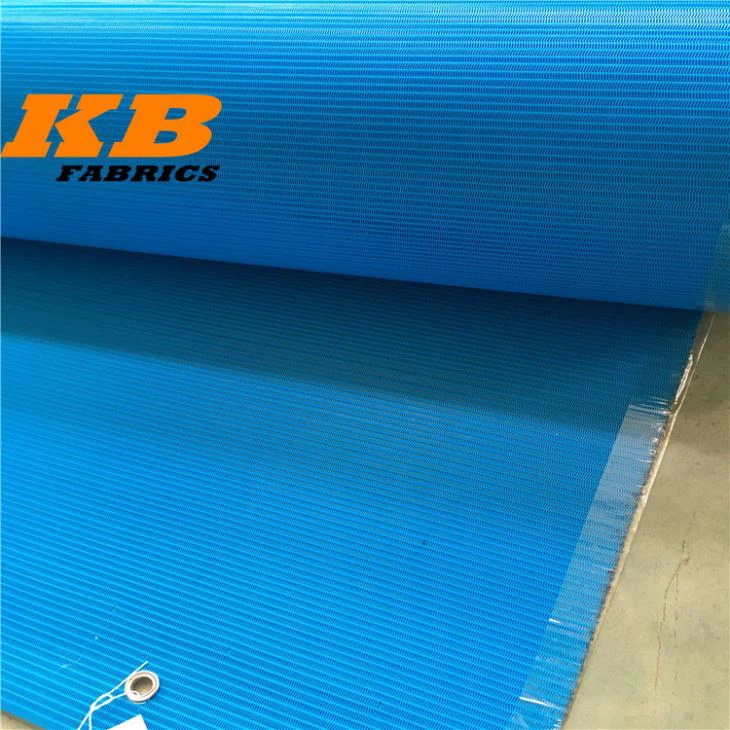

The heat setting process causes the polyester monofilaments to crystallize, which gives the fabric its final shape and properties. It also helps to remove any residual stresses in the fabric, making it more stable and less prone to shrinkage or stretching.
Finishing
After heat setting, the fabric may undergo additional finishing processes to enhance its performance and appearance. One common finishing process is coating. Coating involves applying a thin layer of a polymer or other material to the surface of the fabric to improve its resistance to abrasion, chemicals, or moisture.
Another finishing process is surface treatment. Surface treatment can be used to modify the surface properties of the fabric, such as its friction coefficient or surface energy. This can be particularly useful in applications where the fabric needs to have specific surface characteristics, such as in conveyor belts.
Quality Control
Throughout the manufacturing process, strict quality control measures are in place to ensure that the spiral fabric meets the highest standards. Quality control starts with the inspection of the raw materials and continues at every stage of the manufacturing process.
At the end of the production line, the finished fabric is thoroughly inspected for any defects or inconsistencies. This includes checking the fabric's dimensions, strength, and appearance. Only fabrics that pass the quality control tests are approved for sale.
Applications of Spiral Fabric
Spiral fabric has a wide range of applications across various industries. In the paper-making industry, spiral fabric is used as dryer fabrics and conveyor belts. Small Loop Spiral Dryer Fabrics are commonly used in paper machines to remove moisture from the paper web during the drying process. These fabrics offer excellent drainage properties and can withstand high temperatures and mechanical stresses.
In the food processing industry, spiral fabric is used in conveyor systems to transport food products. Polyester Monofilament Spiral Conveyor Dryer Mesh For Paper Making is a popular choice for food processing applications due to its high strength, chemical resistance, and easy cleaning properties.
In the industrial sector, spiral fabric is used in a variety of applications, such as filtration, separation, and material handling. Spiral Dryer Fabrics Mesh Belt is commonly used in industrial dryers to transport materials through the drying process.
Contact Us for Procurement
If you're in the market for high-quality spiral fabric, we invite you to contact us for procurement. As a leading supplier of spiral fabric, we offer a wide range of products to meet your specific needs. Our experienced team can work with you to understand your requirements and provide you with the best solution.
Whether you're in the paper-making, food processing, or industrial sector, we have the expertise and resources to deliver the spiral fabric you need. Contact us today to discuss your procurement needs and let us help you find the perfect spiral fabric for your application.
References
- "Polyester Fibers: Science and Technology" by A. L. Donald, P. H. Hearle, and S. Postle
- "Textile Science" by Mary V. Vainieri
- "Industrial Textiles: Technology, Applications, and Markets" by P. K. Chattopadhyay